
stop calling yourself "disgustingly educated"
it actually has the opposite effect of what you're going for

good morning—not from the upper west side, this time! today, i am out on an island. for the first time in months, i’m listening to seagulls and i can smell the sea from my window. my parents say they never can, but i’m grateful for my good nose. my head is a few miles west; i’ve started reading lonesome dove, and naturally, i want to ride a horse this afternoon. i am gathering names and heritages in my metaphysical cowgirl’s hat: those of native americans, breeds of horses, pistols. i am on the road to calling myself disgustingly educated.
in fact, the trail is so warm, we can plant a few synonyms here: grossly educated, overeducated, wretchedly educated, sickeningly educated, obnoxiously educated, stupidly educated. do you feel tired yet, reading those? i do. and i think there’s a very loud conversation to be had here.
education is power, but it has concurrently become an aesthetic. it wouldn’t be incorrect to say that education has often been performed as an outward status symbol, but when the students next to me in the library are having a tryst with AI and everybody on the subway is on instagram reels, what does it mean to be educated? i think it would be a good idea to set our first trail-marker here. when we refer to somebody as “disgustingly educated,” what does that mean? at what point does knowledge become so heavy that it becomes sickening? is it comparable to gluttony? in my own simple terms, to be “disgustingly educated” is to voraciously pursue knowledge, and to render yourself a walking, evolving relic of that knowledge. on the page, it sounds beautiful—and it is beautiful! it’s so beautiful, in fact, that it has made its rounds to pinterest boards and aesthetic montages of “no scroll saturdays” and “mandatory may reading” syllabi.
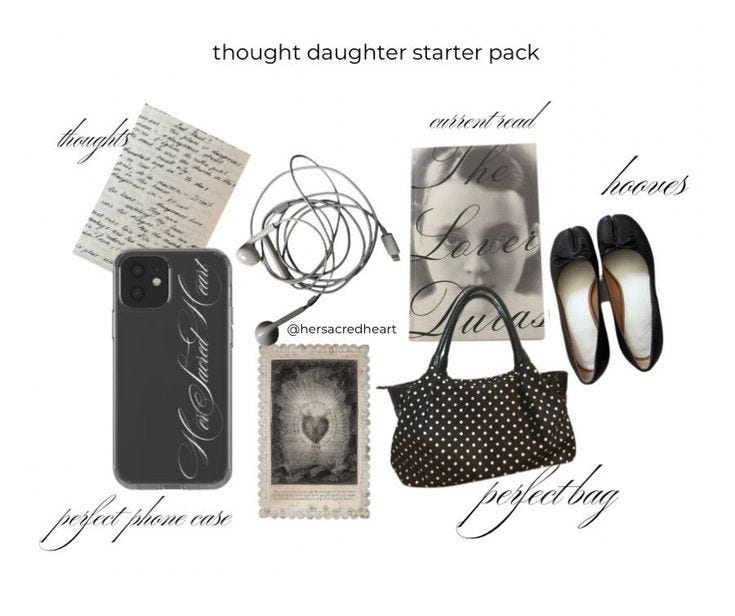
i have two heavy faults with the larp of pursuing a “disgustingly educated” mind—yes, i’m calling it a larp. for clarity’s sake, we’ll build this essay around two pillars:
i. how the term “disgustingly educated” subverts itself into a long list of buzzwords
ii. why the term “disgustingly educated” fails to live up to its revolutionary potential, and how we are a part of the problem by using it
I. HOW THE TERM “DISGUSTINGLY EDUCATED” SUBVERTS ITSELF, SHOOTS ITSELF IN THE FOOT, STUMBLES OVER ITSELF, ETC.
if you scroll on substack for five minutes, it won’t take you much effort to come across an article or ten titled in some variation: “how to become disgustingly educated.” now, i have no qualms with the fact that we’re watching ourselves lose our heads, and we want to reel them back in. let’s straighten that out. hell, i write about it myself!
where, then, do i take issue with it? why are these some of the most frustrating corners of substack (excluding the weird prevalence of ai-generated comments that always seem to land below my posts)?
in my opinion, the term “disgustingly educated” fits into a neat parade of jargon: thought daughter, girl dinner, girlmaxxing, etc. it’s marketable. it’s enticing. it suggests that you have the potential to become something larger than your current identity—and pinterest declares that it’s in. it’s aesthetic and sexy and hot, and even though intelligence is concentrated in the mind, it’s now visually stunning. it’s no coincidence, then, that many posts declaring “i want to become — and disgustingly overeducated” almost always include an allusion to the visual potential of intellect.
if you guessed that the blank is a stand-in for the word “beautiful,” you would be correct! if i had a dollar for every time i read “i want to be beautiful and disgustingly overeducated,” i could retire and write my substack full time for the rest of my life.
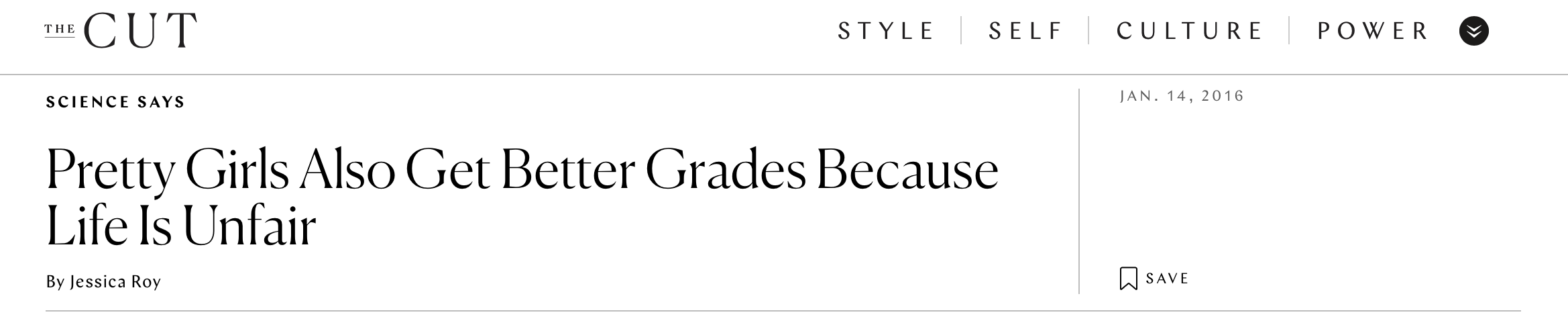
a distinction must be made, again. is beauty something that shouldn’t be pursued? is intelligence simply an accomplice to beauty? the answer is a resounding NO. but when the two are linked permanently at the arms and dished out to young girls who are seeking lodestars and roadmaps on the way to womanhood, the association becomes inherent. when you finish reading this essay, i strongly encourage you to go on pinterest and look up “disgustingly educated.”
here, we must also nod to the commercialization of the modern beauty standard. while the digital world has curated a long, long shopping list that will finally hand you the keys to an attractive appearance (hair curlers, rhode lip tints, chanel perfume, gisou hair oil, diptyque hand creams, rhode, rhode, and more rhode), being “disgustingly educated” has curiously written its own shopping list. see below:
black turtleneck
ralph lauren sweater
dark navy jeans
little white t-shirt
black trench coat
oxfords/mary jane’s/black adidas sambas
longchamp le pliage
“office siren” glasses
returning to what i said earlier, the externals of academia and its participants are often synonymous with consumerism. as a student at an ivy league university, social circles are aggressively built upon it. i can confidently say that the quest to become “disgustingly educated” has become a token of consumerism.
beauty and outward appearance forgotten, there is a rampant urge to ingest as many books, languages, movies, speeches, articles, journals, as one can. this is a lovely and noble thing to pursue, but not when in pursuit of some hard end. not when a quota is meant to be fulfilled, or items to be ticked off of a list. when syllabi are given online (“18 books to read in february to become disgustingly educated,” “10 articles that will make you smart again,”), how many people will follow them to chase a personal pleasure? very few.
these lists, while wonderful in their ability to propagate media to those who are unsure of where to start, also initiate a sort of ticking time bomb. the consumer starts to ask themself: “can i be smart until i read these articles?” what they read may be 500 miles away from their heart, but they must be disgustingly educated if they force-fed themselves and sat through the whole meal. rather than encouraging a natural curation, this synthetic urgency exhausts them with resources that they don’t need. intellect—at least, the sort promised by these lists—is accessible via commercial points. drop “educated” from the end of the term, and the entire cycle is left as it is: plain and disgusting.
you may be shaking your head, so we’ll situate this in a phenomenon that grabbed 99% of my friends (and me!) by the throat in 2020. when netflix released the queen’s gambit, my friends and i collectively agreed that we wanted to become beth harmon. we were not the only ones:
A spokeswoman for eBay, Kara Gibson, said the company had recorded a 215 percent increase in sales of chess sets and accessories since the debut of the show in October. Of the different types of chess sets, wooden are the most popular and sell nine times more than plastic, electronic or glass on eBay, she said.
Vintage set sales have increased seven times, as have sales for equipment, including chess clocks and timers, which are up 45 times since last month.1
i think it’s telling that wooden sets sold nine times more than the other varieties. the show itself has a concentrated, vintage aesthetic, and when choosing where to spend their money, the visual component is an undeniable factor. hence my point that the quest to become “disgustingly educated” has become another effort to fulfill a palatable, attractive characteristic.
II. WHY THE TERM “DISGUSTINGLY EDUCATED” FAILS TO LIVE UP TO ITS REVOLUTIONARY POTENTIAL, AND HOW WE ARE A PART OF THE PROBLEM BY USING IT
now i have a bone to pick with the structure of the term itself. education is your liberation. if your intellect is your freedom, why strike it with the word “disgusting?” why knot the two so interchangeably that when you read the title of this post, you likely reached back into the reserves of your memory, and you thought of the videos you scrolled through with the same term in the title?
this isn’t the fault of any particular person or app. was it popularized to a maddening extent? yes, but we also must look down at our feet and remember that we are standing in an age of profound anti-intellectualism. a common explanation for the inclusion of the word “disgusting” is as simple as the fact that reading, thinking, writing, and the process of basic mental consideration are considered intimidating or excessive. why read a book when an AI can feed it to you in bullet points? why watch a movie for two hours when AI can dish out a summary? for once, the common thinker has a personal jester, and they don’t know what to do with it.
when we use the term “disgustingly educated” we are driving a deeper furrow into the ground. we are insinuating that education is daunting—and it is, but that’s the miracle of it. it is not supposed to be a repulsive agent. we insist that the “disgustingly educated” person is the most interesting in the room, the tallest in the room, the highest in the room—which, returning to part i of this piece—is often an external pursuit, rather than internal. it becomes a hazy, shapeless point that is at once sickening and for sale.
when we propagate the term “disgustingly educated,” we propagate the subconscious belief that there is, indeed, something off-putting about thinking deeply. we acknowledge that education is an extreme force against political and social hierarchies and history and scientific reasoning and the very foundations of human existence, and that we are too small for the task.
so then, i beg the general public: stop using the term “disgustingly educated.”
delete your goodreads account. forget that you must read 10 books in one month. take your time, and remember that you are a lucky star to have time. stop calling yourself a curator. just sit with yourself for a while.
education is a human right. learn how to knot a rope. teach yourself how to translate latin into ancient greek. but if you are truly serving yourself, stop waiting for the tide to bring you along. if you want the pearl at the bottom of the sea, use your hands and dig. the current is only so strong.
Fazio, Marie. 2020. “‘The Queen’s Gambit’ Sends Chess Set Sales Soaring.” The New York Times, November 23, 2020, sec. Arts. https://www.nytimes.com/2020/11/23/arts/television/chess-set-board-sales.html.
I knew we were fucked once people started wearing those tiny mui mui glasses 😭
Yes!! Same goes for the “overeducated woman” trope… such a reductive way to frame the pursuit of knowledge